Billboard Gallery
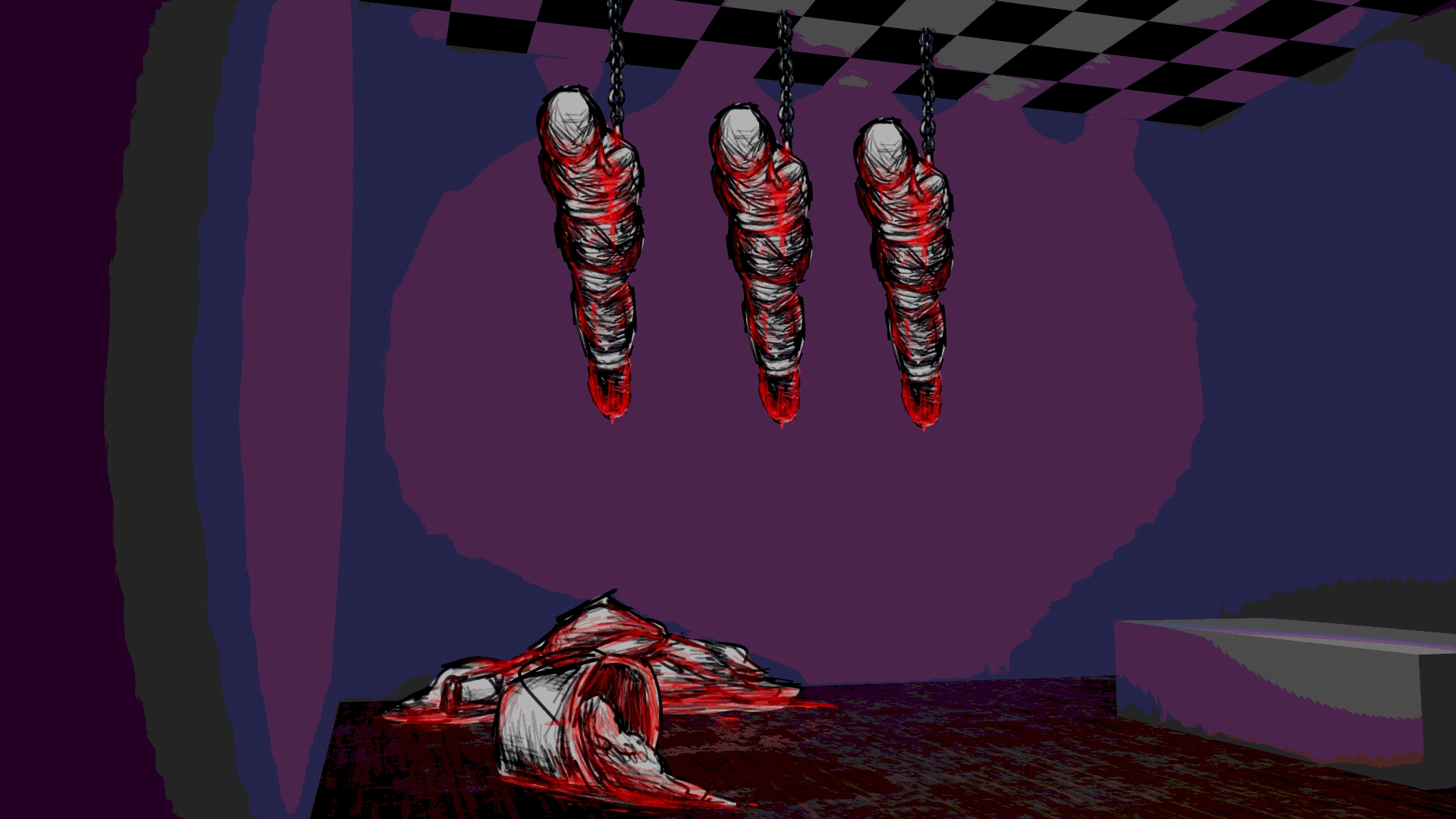
Tony’s Pizza is a short first-person horror experience at the world’s finest and freshest pizzeria in town. However, beneath the cute and relaxing themes is a sinister secret kept from paying customers. This game was developed for the 2025 Dink Jam, inspired by the theme of “Fake News”. This project was a collaborative effort by me and four other team members, where I programmed and designed the game, ensuring it fit within our theme and really subverted expectations.
For this project, I took on the role of Games Designer and Programmer for the project, working on the environment and UI interfaces, as well as the functionality between creating the pizzas and taking orders from the customers.
24th - 26th October 2025
26th October 2025
Released for PC / Windows Platforms.
Tony’s Pizza was my first Game Jam during my first year of University. In the lead-up to the Jam, several lecturers across both Game Creation and Games Design and Mechanics prompted us to take part in as many Jams as possible to start putting our name out in the creative space and to speak to and interact with the industry. This prompted me to enter the 2025 Dink Jam. I’ve had previous experiences with Jams inside of College, so I knew what to roughly expect from the event, but what was probably the biggest difference was only having less than 48-hours to create and develop an idea to fit within the theme.
For this jam, I partnered up with 4 other people to fit within the theme of “Fake News”. From the get-go, we were already leaning into a more twisted and sinister tone, and began throwing some of the ideas around. We thought about doing a visual novel at first, which we were more on board with, and so I began to work on the project from home. We wanted to go to an unsettling Pizzeria where people would come in asking for a specific pizza, we would have to then harvest the human remains for the topping, and then make the pizza with it.
I’m not totally familiar with the style or overall feel of a Visual Novel, and didn’t want to jump the gun setting it out, just for myself to have done incorrectly, so I started by turning a blank Unreal Engine 5 template into a very simple third-person experience where you harvested, made, and sold pizza, just like we wanted. Having started the Jam late on a Friday evening, just having this progress was good enough for me, so I was ready to kick the rest of the Jam hard and create something I’m proud of.
The following day, I met up with my team in the early morning and showed them what I’d developed and laid out. However, very early on, I could tell their opinion on the current state wasn’t the most positive. One of our members wasn’t able to stick around the whole day, but he did pass on the comments from my other members. This really gave me a bite out of how poor communication can really break a team down. I had zero ways of contacting my team that evening, and I had no idea what they were doing that evening to help with creating our idea. In the moment of being told this isn’t what we wanted and a very frosty reception, I would have been happy to ditch the project and quit the jam, but I didn’t want that to be the case.
I suggested that we could still pivot from the current look to the Visual Novel style, but we decided it wasn’t worth it. However, we did decide to blend the 3D environment with a large ensemble of 2D drawings done by the rest of my team. This was another small issue I found while developing the game; the discipline landscape wasn’t balanced in the slightest. I’m a designer, but I took on both design and programming. We had a programmer, but they took on art; we had two artists, who did art-based assets; and our fifth guy, who wasn’t able to stick around or contribute because of work commitments. We were a fine team, but my becoming both the developer and designer was a bit annoying, and being so art-heavy, I think it severely impacted the potential of this project.
However, we did turn in a project, one that definitely sticks out from all the others I’ve made across the last three years. I think it’s fair to say that we certainly had some hiccups with this project on the team side, but we created something that stood out from the other submissions.
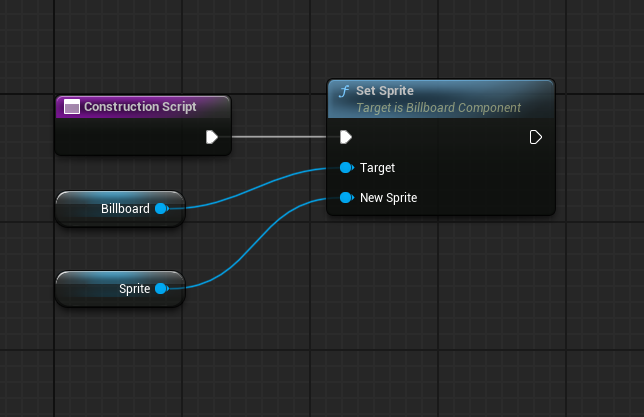
One of the standout aspects of this project is blending the 2D art elements into the 3D space. Originally, we were going to settle for using planes and then putting the images on through materials, but right around this time, I’d just played the Star Wars: Dark Forces Remaster, which reminded me of the 2D Sprites that would change direction based on the player. This led me to make a blueprint actor with a billboard component and to assign one of the images an artist had made. From here, I would place the blueprint in the level and then in the details panel, change the billboard sprite to be a different texture instead.
On reflection, this really helped enhance the environment a great deal, helping to make the game stand out significantly. The only development I’d make is enhancing the blueprint actor to be more easily modular, by using the construction scripts to set the billboard sprite to an instance editable variable to make it significantly easier.
Additionally, upon starting the game and pressing play, the game would run a short animated cutscene before you started the game, giving a small hint to the more sinister nature of this product. I achieved this similarly to several assets in Tactics, Tea, and Tentacles back in College, where I had several different images as frames, converted them into a texture array, and used this to create an animated material.
On reflection, this didn’t really work as intended. I didn’t know how to actually play a media source inside of Unreal Engine as a part of a UI widget, and because of this, the material of the animation is always playing, so pressing the play button a couple of seconds after the game loads, the clip is out of sync. To fix this, I’d create a File Media Source and convert it into a Media Player, also producing a Media Texture, which I can make into a material to add to the UI. Then, inside the UI, I can play the video when it is shown on the screen rather than all the time.
To reflect on this project as a whole, I think it certainly stands out against previous creations I made during my time in college. do like the direction we took the art style and the unique blend of 2D and 3D elements within the game. The overall time we spent developing the game felt like a good use of our time, producing a playable prototype within a day after the jam had begun. I think the real setbacks with this project were the lack of communication and the spread of skills across the team. We did manage to produce a product, and in good time, but had we collaborated a lot more, maybe we could have really enhanced this overall project. One aspect that stands out, personally, is the lack of guidance and overall mention towards controls for the player. This can be a deal breaker for a player, giving them a fair excuse not to play when they have no mention to the overall story (other than the small cutscene) and zero help with the controls unless you happen to pause the game. However, I made sure with this project to prioritise the implementation of sound effects to help enhance the environment, which helps with giving player feedback; however, when you’re unable to complete one of the main actions, no sound plays at all to tell you this, and likewise, no pop-up message to tell you where you’re going wrong. However, stepping back from these issues and looking at it as a 48-hour game jam, where we accomplished a unique experience and I furthered my skills, it certainly helped me develop my knowledge and helped identify areas of improvement down the line.